
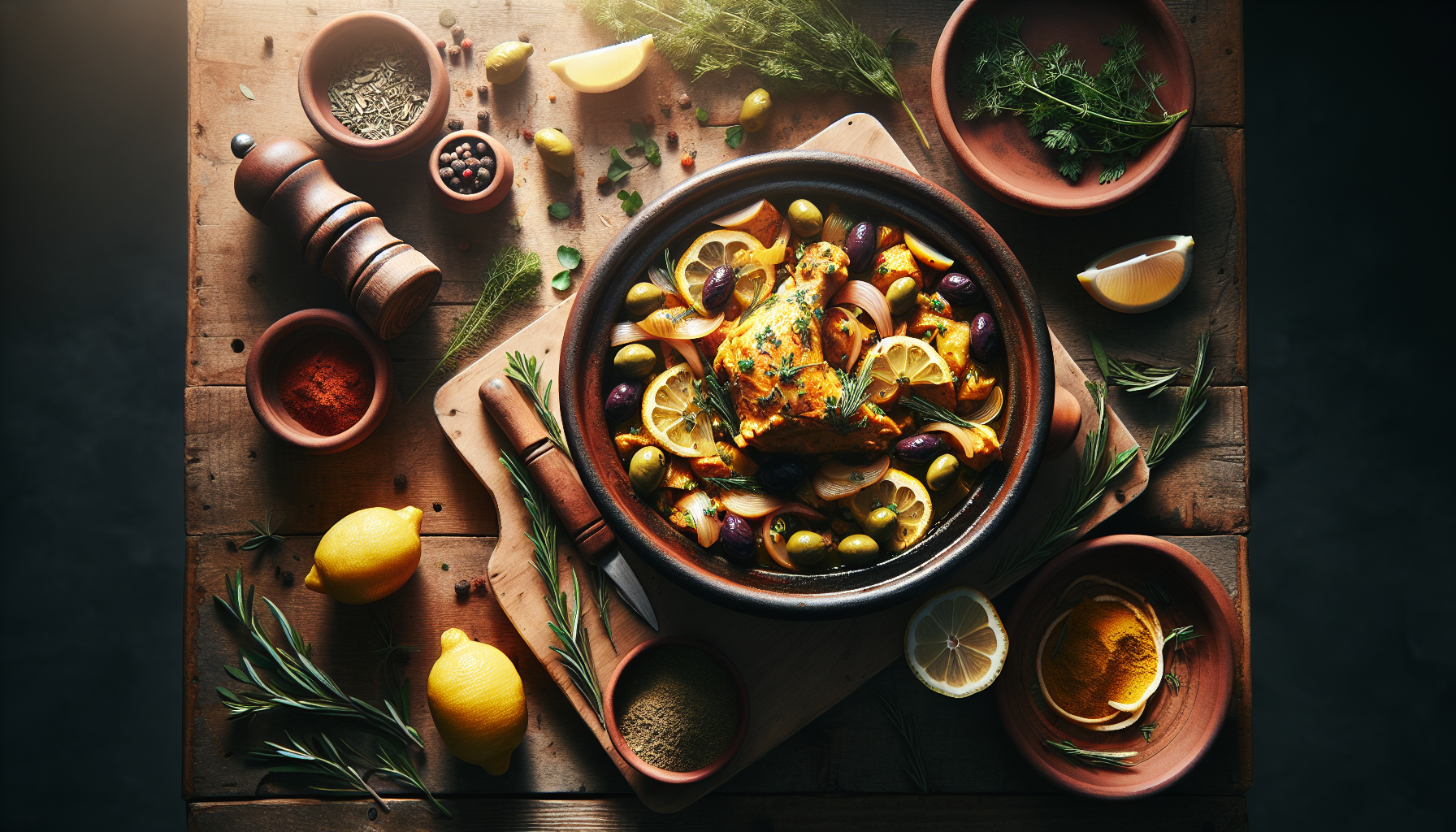
Zesty Moroccan Chicken Tagine with Preserved Lemons and Olives
There’s a unique aroma that wafts through my kitchen whenever I prepare a traditional Moroccan tagine. It’s a scent that instantly transports me back to the bustling streets of Marrakesh, where the air is perfumed with the mingling spices of countless food vendors. One of my cherished memories is wandering through a local souk, engaging with vendors who proudly displayed their colorful array of spices and ingredients. It was there that I first fell in love with Moroccan cuisine, a love affair that has only grown deeper with time.
Among the many jewels of Moroccan culinary tradition, the Chicken Tagine with Preserved Lemons and Olives stands out as a personal favorite. This Moroccan recipe is a perfect marriage of savory and tangy flavors, where the preserved lemons add a zesty brightness and the olives contribute a briny depth. Cooking this dish is more than just preparing a meal; it’s an experience that connects you to centuries of Moroccan tradition. It’s about gathering loved ones around the table, sharing stories, and savoring each bite as it melts in your mouth.
This particular tagine, with its harmonious blend of spices and ingredients, embodies the essence of traditional Moroccan food. Each time I make it, I’m reminded of the warmth and hospitality of the Moroccan people, who are always eager to share their culinary heritage. Today, I’m excited to share this recipe with you, hoping it brings a taste of Morocco into your home and inspires your own culinary adventures.
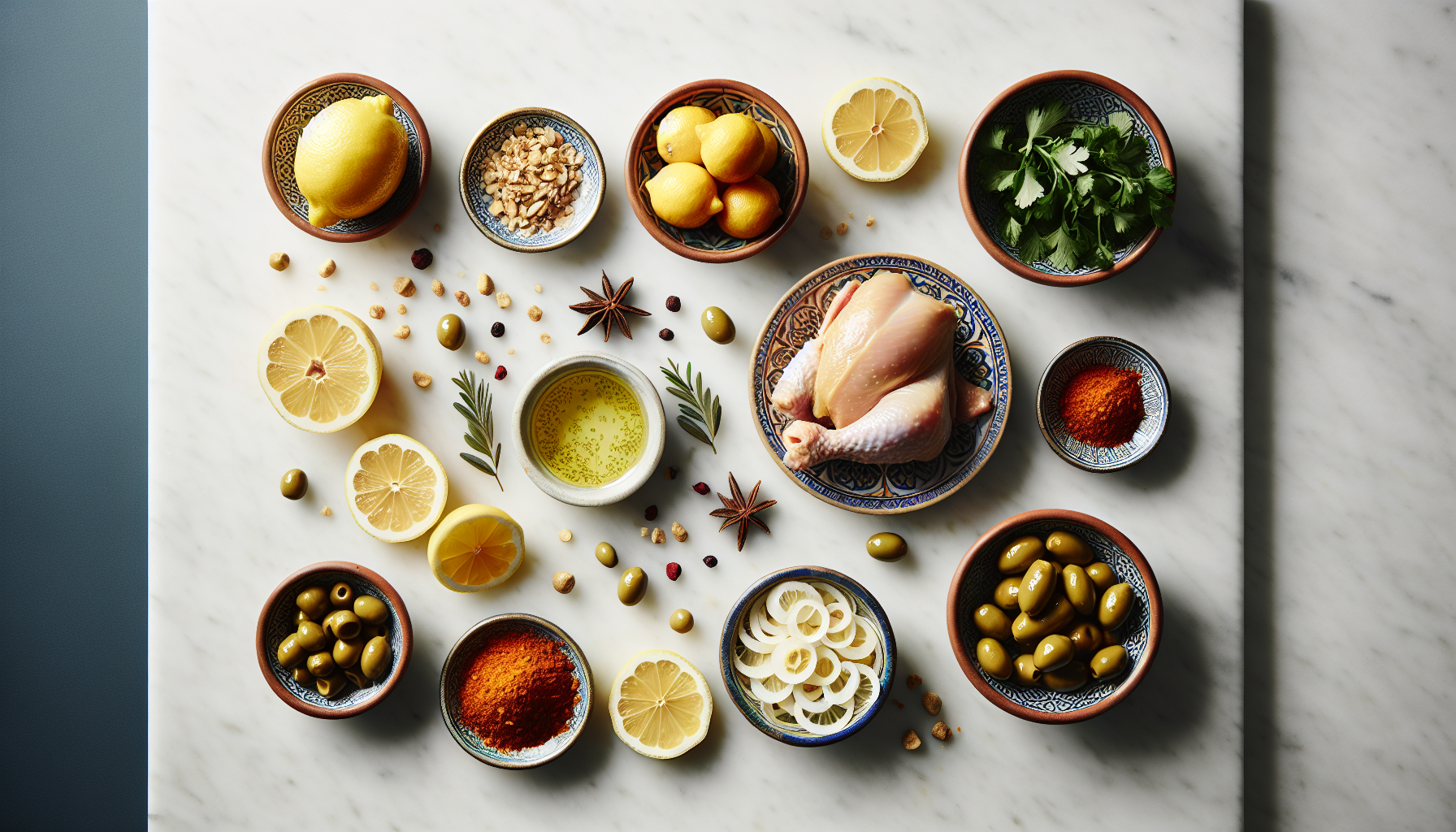
Ingredients
- 1 whole chicken, cut into pieces
- 2 preserved lemons, quartered
- 1 cup green olives, pitted
- 2 tablespoons olive oil
- 1 large onion, finely chopped
- 3 cloves garlic, minced
- 1 teaspoon ground cumin
- 1 teaspoon ground ginger
- 1 teaspoon turmeric
- 1 teaspoon paprika
- 1 teaspoon ground coriander
- 1 cinnamon stick
- Salt and freshly ground black pepper to taste
- 2 cups chicken broth
- Fresh cilantro and parsley, chopped for garnish
Step-by-Step Instructions
- Begin by heating the olive oil in a large tagine or heavy-bottomed pot over medium heat. Add the onion and garlic, sautéing until the onion becomes translucent and aromatic.
- Introduce the spices: cumin, ginger, turmeric, paprika, and coriander. Stir them into the onions and garlic, allowing their flavors to bloom in the warm oil.
- Add the chicken pieces to the pot, ensuring they are well-coated in the spice mixture. Brown the chicken on all sides, which should take about 10 minutes.
- Once the chicken is browned, add the preserved lemons, green olives, and the cinnamon stick. Season with salt and pepper to taste.
- Pour in the chicken broth, bringing the mixture to a gentle simmer. Cover the tagine or pot, reducing the heat to low, and let it cook for about 1 to 1.5 hours.
- Check occasionally to ensure the chicken is tender and the flavors have melded beautifully. If needed, add more broth or water to keep the ingredients submerged.
- Before serving, garnish with freshly chopped cilantro and parsley for a burst of color and freshness.
- Serve the tagine hot, ideally with crusty bread or fluffy couscous to soak up the delicious sauce.
Pro Tips
- For an authentic Moroccan flavor, make sure to use preserved lemons, which can be found in specialty stores or homemade.
- If you don’t have a traditional tagine pot, a Dutch oven works well as a substitute.
- Allow the tagine to rest for a few minutes after cooking, as this helps the flavors to deepen and intensify.
- For a richer flavor, marinate the chicken in the spice mixture for a few hours or overnight before cooking.
Variations
This Moroccan recipe is wonderfully adaptable. For a vegetarian version, substitute the chicken with hearty vegetables like eggplant, zucchini, and carrots. You can also use lamb instead of chicken for a richer, more robust flavor. If you’re feeling adventurous, try adding a handful of dried fruits, such as apricots or raisins, to introduce a subtle sweetness that complements the zesty preserved lemons. The beauty of Moroccan cuisine lies in its flexibility, allowing you to tailor each dish to your personal taste preferences.
Frequently Asked Questions
- What is a tagine?
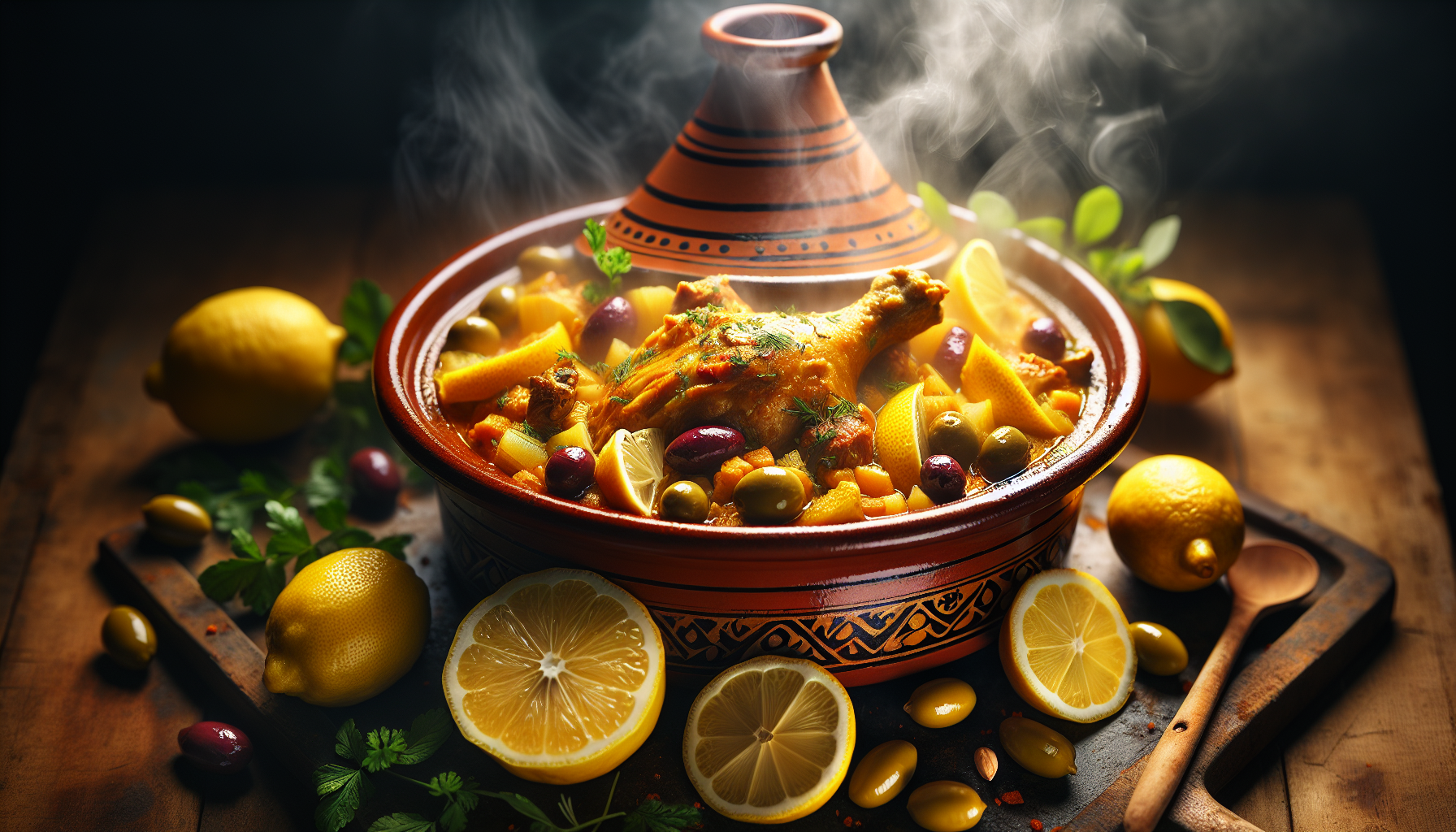
- A tagine is both the name of the conical-shaped earthenware pot used in Moroccan cooking and the dish itself. The unique shape of the pot helps to circulate steam and keep the contents moist.
- Can I use fresh lemons instead of preserved lemons?
- While fresh lemons will add acidity, they won’t replicate the deep, complex flavor of preserved lemons, which are fermented in salt and lemon juice. It’s worth seeking out preserved lemons for an authentic taste.
- What can I serve with Chicken Tagine?
- Chicken Tagine is traditionally served with couscous, but it pairs equally well with rice or warm, crusty bread to soak up the flavorful sauce.
- How can I store leftovers?
- Leftovers can be stored in an airtight container in the refrigerator for up to 3 days. Reheat gently on the stove to preserve the texture and flavors.
- Is this dish spicy?
- This Chicken Tagine is mildly spiced, with warmth coming from the blend of spices rather than heat. You can adjust the spice levels by adding more paprika or a pinch of cayenne pepper if desired.
Conclusion
Preparing a Zesty Moroccan Chicken Tagine with Preserved Lemons and Olives is not just about crafting a meal; it’s about embracing a slice of Moroccan culture and history. The combination of vibrant spices, tangy lemons, and briny olives creates a dish that’s both comforting and exotic. Whether you’re a seasoned lover of Moroccan cuisine or a curious newcomer, this traditional Moroccan food promises a culinary journey to the heart of Morocco with every bite. Gather your loved ones, savor the shared experience, and let the magic of this Moroccan recipe bring warmth and joy to your table.