
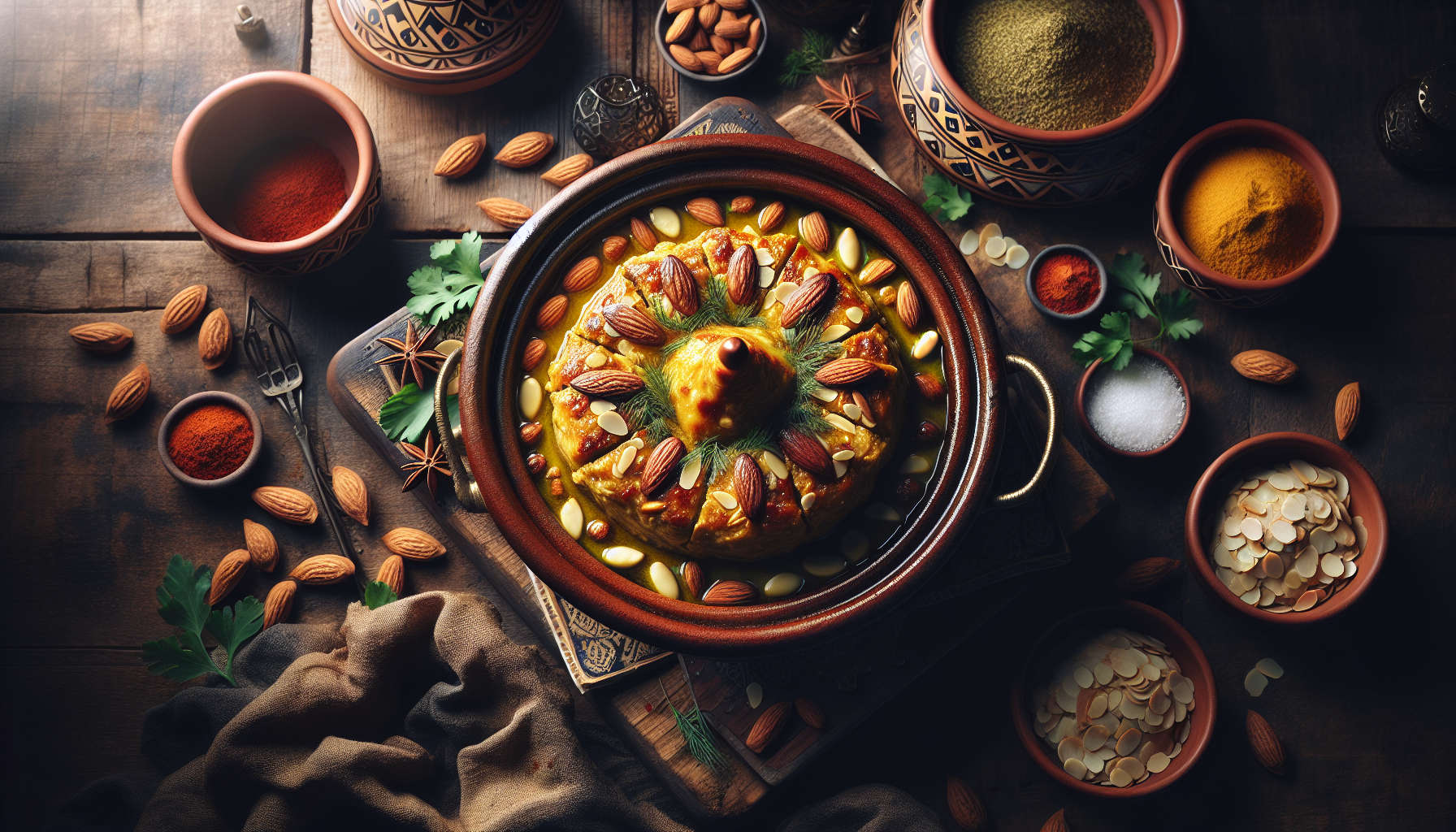
Authentic Moroccan Chicken Bastilla with Almonds and Saffron
There was a time when the bustling streets of Marrakech drew me in like a magnet, a world filled with vibrant colors, aromatic spices, and the friendly hum of the local souks. Among the many culinary treasures I discovered, the Moroccan Chicken Bastilla stood out as a true gem. This traditional Moroccan food is a masterful blend of flavors, textures, and aromas, wrapped in delicate warka pastry. It is both a feast for the senses and a testament to the rich culinary heritage of Moroccan cuisine.
For centuries, Moroccan families have gathered around tables laden with bastilla at celebratory occasions, from weddings to family gatherings. The dish’s intricate preparation and exquisite taste make it a centerpiece worthy of such events. As I learned from a warm-hearted Moroccan chef, each bite of bastilla tells a story of history and culture, infused with the luxury of saffron and the comforting warmth of cinnamon. The experience of making bastilla at home transports you to the heart of Morocco, allowing you to share in its flavorful traditions. Now, I invite you to join me on this culinary journey and discover the magic behind this authentic Moroccan recipe.
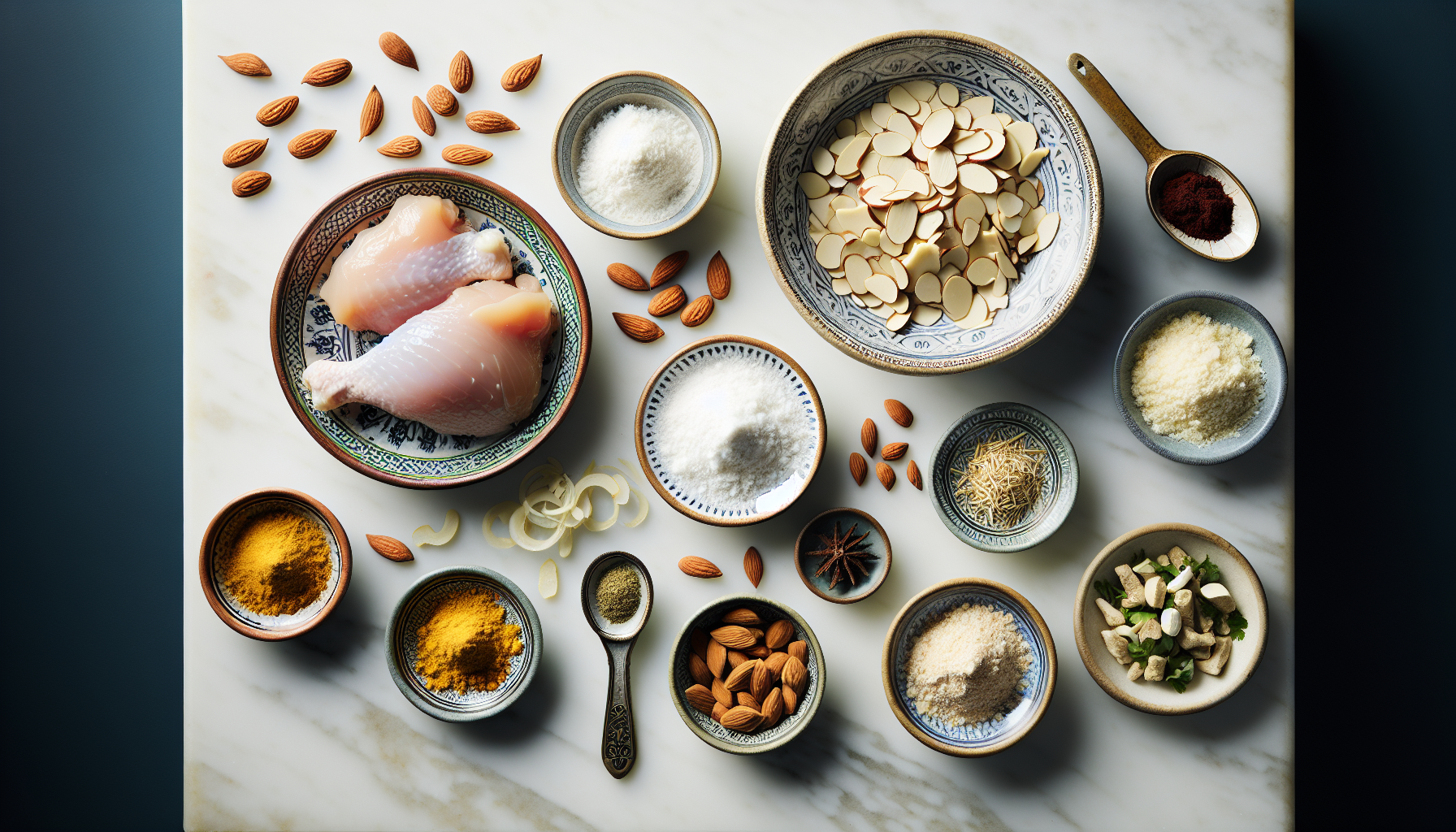
Ingredients
- 1 whole chicken (about 3-4 pounds), cut into pieces
- 2 large onions, finely chopped
- 4 cloves garlic, minced
- 1 teaspoon ground ginger
- 1 teaspoon ground cinnamon
- 1 teaspoon ground turmeric
- 1/2 teaspoon saffron threads, soaked in warm water
- Salt and freshly ground black pepper, to taste
- 1/4 cup olive oil
- 1/4 cup unsalted butter
- 1 cup chopped fresh parsley
- 1/2 cup chopped fresh cilantro
- 6 large eggs, beaten
- 1 cup blanched almonds, toasted and coarsely ground
- 1/4 cup powdered sugar
- 1 teaspoon ground cinnamon (for almond mixture)
- 1 package warka or phyllo pastry sheets
- 1/2 cup melted butter (for brushing pastry)
- Powdered sugar and ground cinnamon for garnish
Step-by-Step Instructions
- In a large pot, heat the olive oil and butter over medium heat. Add the chicken pieces and season with salt, pepper, ginger, cinnamon, and turmeric. Sauté until the chicken is browned on all sides.
- Add the chopped onions, garlic, and saffron water to the pot. Stir well to combine. Cover the pot and let the chicken simmer over low heat for about 45 minutes, or until the chicken is fully cooked and tender.
- Remove the chicken from the pot and set aside to cool. Once cool enough to handle, shred the chicken meat into small pieces, discarding the bones and skin.
- In the same pot, add the parsley, cilantro, and beaten eggs to the onion mixture. Cook over medium heat, stirring constantly, until the eggs are scrambled and the mixture is thickened. Remove from heat and set aside.
- In a mixing bowl, combine the ground almonds with powdered sugar and cinnamon. Mix well.
- Preheat your oven to 375°F (190°C).
- To assemble the bastilla, lightly grease a round baking dish or springform pan. Lay a sheet of warka or phyllo pastry in the dish, allowing the edges to hang over the sides. Brush the pastry with melted butter.
- Layer about 4-5 sheets of pastry, brushing each one with butter, ensuring they cover the bottom and sides of the dish.
- Spread half of the egg mixture over the pastry. Top with a layer of shredded chicken, then a layer of the almond mixture. Repeat the layers, finishing with the remaining egg mixture.
- Fold the overhanging pastry edges over the filling to enclose it. Place several more buttered sheets of pastry on top to seal the bastilla completely.
- Bake the bastilla in the preheated oven for about 25-30 minutes, or until the pastry is golden and crisp.
- Remove from the oven and let it cool slightly before inverting onto a serving platter.
- Garnish with powdered sugar and a dusting of cinnamon before serving.
Pro Tips
- Use high-quality saffron for an authentic flavor. Its fragrance is unparalleled and elevates the dish.
- Prepare the chicken and egg mixtures in advance to save time on the day you plan to bake the bastilla.
- Ensure the pastry layers are well-buttered to achieve a crisp, flaky crust.
- If warka pastry is unavailable, phyllo dough is a good substitute, though it requires careful handling to prevent drying out.
- Balance the sweet and savory elements by adjusting the amount of sugar and cinnamon in the almond mixture.
Variations
The beauty of Moroccan cuisine lies in its versatility, and bastilla is no exception. Traditionally made with pigeon, chicken is a more accessible substitute in many households today. For a seafood twist, try a fish and shrimp filling paired with a creamy béchamel sauce. Vegetarians can enjoy a delightful version with mushrooms, spinach, and a blend of Moroccan spices. Experimenting with fillings allows you to tailor the bastilla to your taste while maintaining the essence of this beloved Moroccan recipe.
Frequently Asked Questions
- What is the origin of bastilla?
- Bastilla has Andalusian origins and was brought to Morocco by Moors. It has become a staple of Moroccan cuisine, often featured at special occasions.
- Can I prepare bastilla ahead of time?
- Yes, you can assemble the bastilla a day in advance and refrigerate it. Bake it just before serving for best results.
- What can I serve with bastilla?
- Bastilla pairs well with a light salad, such as a Moroccan orange and olive salad, or a simple green salad with a lemon vinaigrette.
- How do I store leftovers?
- Leftover bastilla can be wrapped and stored in the refrigerator for up to 3 days. Reheat in the oven to maintain its crispness.
Conclusion
Creating an authentic Moroccan Chicken Bastilla is an immersive journey into the heart of Moroccan cuisine, where each step is a celebration of flavor and tradition. From the fragrant saffron to the sweet crunch of almonds, every ingredient tells a story of cultural richness and culinary artistry. Whether you’re hosting a festive gathering or simply indulging in a personal culinary adventure, this bastilla recipe promises to transport you to the vibrant streets of Morocco with every delicious bite. Embrace the opportunity to savor this traditional Moroccan food and share in the joy of its timeless allure.